
Storms Leave Damage That Spreads Quietly
Roof Repair in Hendersonville for wind, hail, and weather damage that compromises shingle integrity
Wind lifts shingles and tears flashing, hail cracks granule surfaces and dents metal components, and the resulting openings allow water into the roof deck where rot begins before visible leaks appear inside the home. Happy Homes repairs residential roofs throughout Hendersonville and Sumner County, addressing storm damage with material-specific techniques that restore weather resistance and structural integrity. The repair process includes insurance claim documentation, since seasonal hail and windstorms drive most emergency roof work in this region and coverage depends on properly prepared damage assessments.
Repair scope depends on material type—asphalt shingles require individual tab replacement and sealant reactivation, metal roofs need fastener tightening and panel re-seaming, and flat systems demand membrane patching and seam reinforcement—with each approach following manufacturer specifications to maintain warranty coverage. The assessment phase determines whether damage remains localized or has spread across multiple roof planes, which affects both repair cost and whether partial repair remains viable compared to full replacement.
Arrange a damage assessment to document repair needs and prepare insurance claim materials before water intrusion worsens..
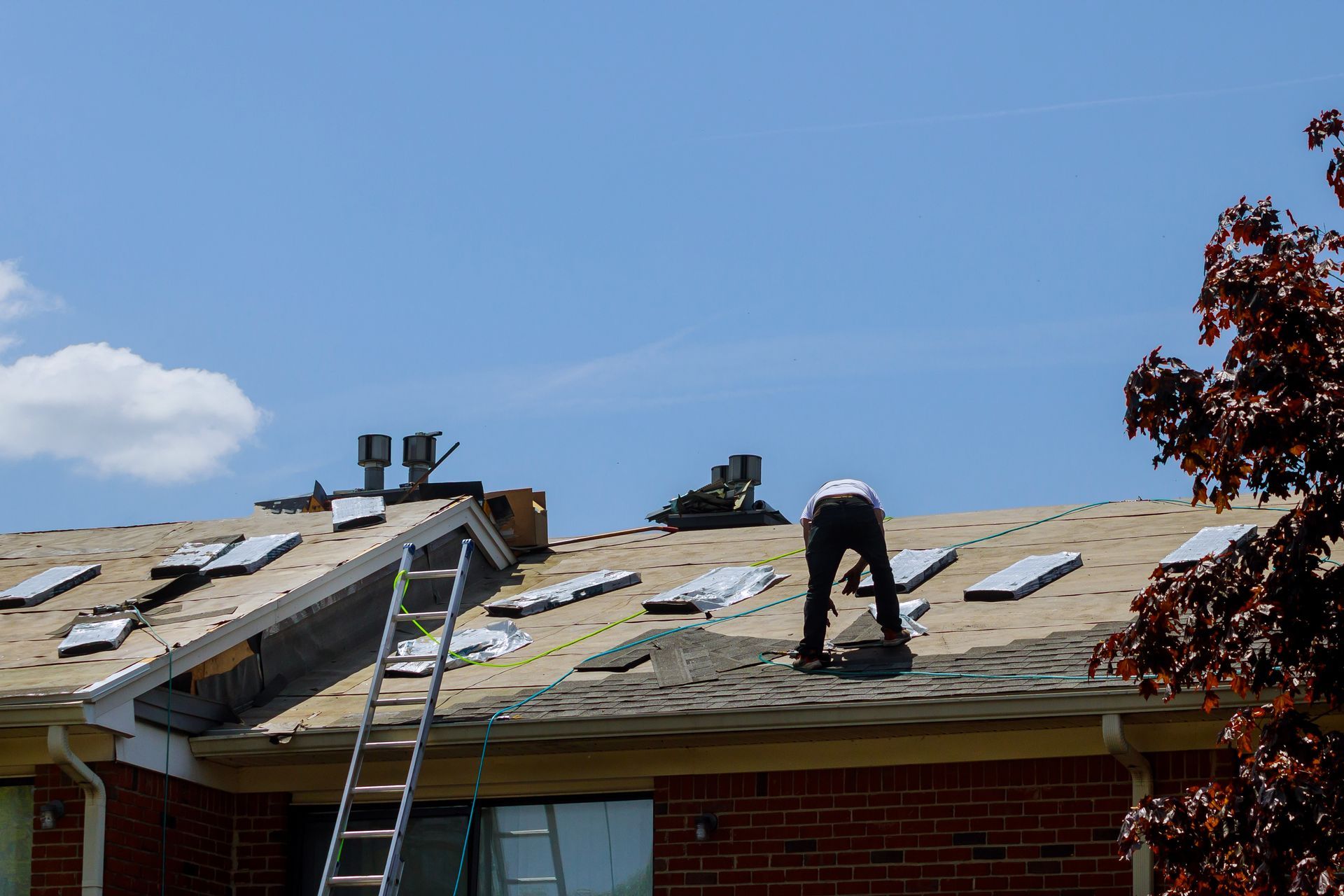
How Material-Specific Repair Stops Further Deterioration
Asphalt shingle repair replaces torn or missing tabs, re-seals lifted edges, and installs new flashing where wind has separated metal from roof planes, while metal roof repair focuses on fastener replacement, sealant renewal at panel seams, and trim reinstallation where expansion and contraction have loosened connections. Flat roof systems require different intervention—membrane patches cover punctures and tears, while seam tape and heat welding restore waterproof integrity at joints where thermal movement causes separation.
After repair, the roof sheds water without ponding, flashing channels runoff away from vulnerable joints, and no gaps remain where wind can lift materials during the next storm. You notice that ceiling stains stop expanding, attic insulation stays dry, and the visible damage—missing shingles, dented metal, torn membrane—no longer appears when you inspect the roof line from ground level.
Insurance claim support includes photographing damage, preparing scope-of-work estimates, and communicating directly with adjusters to verify that repair specifications meet carrier requirements, which accelerates approval and ensures that approved amounts cover the full repair rather than leaving gaps you must fund independently..
Answers to Repair Questions
Roof repair work in Sumner County addresses timing, insurance processes, and how partial repair compares to full replacement when storm damage affects multiple areas.
What determines whether repair is sufficient or replacement is necessary?
Repair works when damage affects less than 30 percent of the roof surface and the underlying deck remains structurally sound, but widespread hail impact, multiple leak points, or compromised decking typically justify replacement since patchwork repairs on extensively damaged roofs fail prematurely and cost more over time than a single replacement project.
How does insurance claim documentation affect repair approval in Hendersonville?
Adjusters require dated photographs of impact damage, measurements of affected areas, and material specifications showing that repair methods match manufacturer standards, so thorough documentation prevents claim denials and ensures approved amounts cover actual repair costs rather than forcing you to pay differences out of pocket.
Why do some repaired roofs leak again after the next storm?
Repairs that use mismatched materials, skip underlayment replacement, or omit proper flashing integration leave gaps where water enters during heavy rain, especially when installers prioritize speed over sealing vulnerable transitions at valleys, chimneys, and roof-to-wall joints.
How long does material-specific repair take to complete?
Single-plane shingle repairs typically complete in one day, metal roof fastener and seam work requires one to two days depending on panel count, and flat membrane patches finish within hours unless seam failure extends across large sections that need heat welding.
What happens if repair uncovers additional hidden damage?
Deck rot, compromised framing, or failed underlayment discovered during repair gets documented immediately, and you receive updated scope and cost information before proceeding, so no unexpected expenses appear after work begins and you control whether to expand the project or address issues later.
Happy Homes completes repairs to manufacturer specifications and provides documentation for insurance records and future reference. Contact our office to schedule a damage evaluation and receive a detailed repair proposal based on your roof's specific material and condition.