
Membrane Systems Built for Tennessee Moisture Patterns
Flat Roofing in Hendersonville for residential applications experiencing pooling water, seam failure, or premature membrane wear
Flat roofs in Tennessee accumulate moisture faster than sloped systems because standing water doesn't drain naturally, and membrane materials degrade under constant UV exposure and temperature cycling. Happy Homes installs and repairs flat roofs for residential applications throughout Hendersonville, Gallatin, and Westmoreland, addressing the drainage failures and puncture damage that shorten membrane lifespan. You'll see pooling in low spots after heavy rain, seam separation where adhesive has failed, or blistering where moisture has infiltrated the substrate—all indicators that the membrane system is no longer protecting the structure beneath.
A full membrane inspection identifies where water collects, locates punctures or tears, and checks seam integrity across the entire roof surface. Modern TPO membranes resist UV degradation better than older materials and offer heat-welded seams that outperform adhesive-only bonds. Proper slope installation ensures that water moves toward drains rather than pooling, and flashing at roof penetrations—vents, skylights, HVAC units—is rebuilt to prevent the leaks that originate at these vulnerable transitions.
Arrange an on-site consultation to review current membrane condition and determine whether targeted repairs or full replacement makes sense for your timeline..
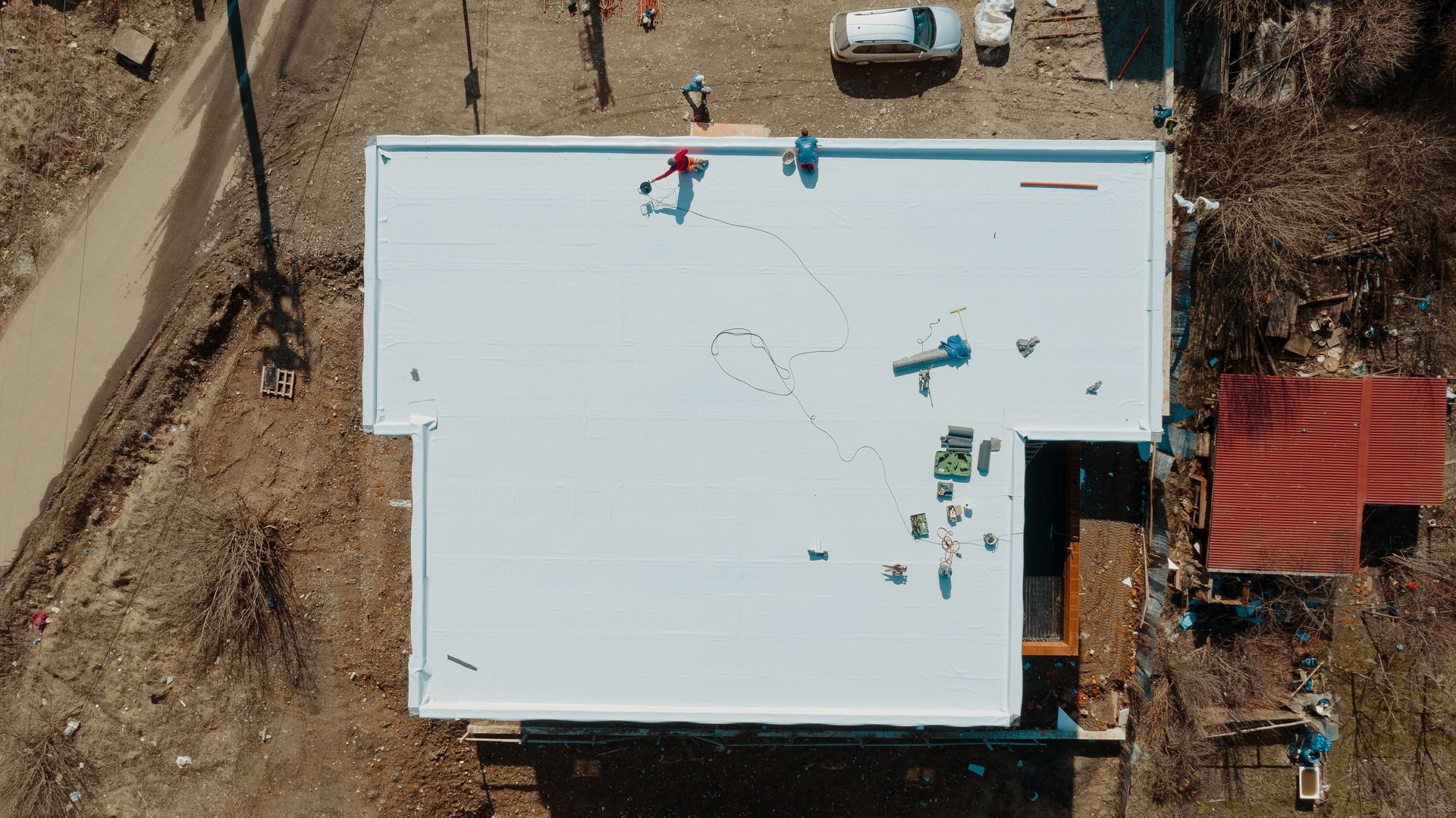
What Proper Flat Roof Installation Requires
Installation begins with removing the existing membrane down to the roof deck, allowing inspection for substrate damage caused by long-term leaks. Any deteriorated decking is replaced, and the surface is cleaned and dried before the new membrane goes down. Tapered insulation panels are positioned to create positive slope toward drains—even a quarter-inch per foot makes the difference between water evacuation and chronic pooling. The TPO or similar membrane is mechanically fastened or fully adhered depending on roof configuration, and seams are heat-welded to form watertight bonds that won't separate under thermal expansion.
After completion, you'll notice that water no longer stands on the roof surface after storms, interior ceilings remain dry during heavy rain, and the membrane surface shows uniform appearance without the bubbling or wrinkles that signal trapped moisture. Flashing around penetrations sits flat and sealed, preventing the wind-driven water intrusion that causes staining on interior walls below roof-mounted equipment. The system performs as designed because slope, seam quality, and flashing details were addressed during installation rather than deferred.
Flat roofing work includes drainage verification through water testing before final sign-off, ensuring that design translates to actual performance. Tennessee's seasonal moisture load and freeze-thaw cycles demand materials and installation methods that account for expansion, contraction, and prolonged wet conditions. Happy Homes specifies membrane systems based on your roof's exposure, existing slope limitations, and the service life you're planning for..
Answers to Common Flat Roofing Questions
Flat roof projects involve decisions about materials, drainage, and when repair makes sense versus full replacement.
What causes flat roofs to fail prematurely in this region?
Tennessee's combination of intense summer UV, high humidity, and freeze-thaw cycles accelerates membrane aging, while inadequate slope allows prolonged water contact that degrades even quality materials faster than rated lifespan.
How is proper slope created on an existing flat roof?
Tapered insulation panels are installed over the existing deck to create gradual slope toward drains, typically a minimum quarter-inch per foot, without altering the structure beneath.
Why do seams fail on older flat roofs?
Adhesive-bonded seams lose strength as the adhesive dries out and the membrane contracts, while heat-welded seams on modern TPO systems fuse the material itself and resist separation under thermal stress.
When does a flat roof need full replacement instead of repair?
If more than thirty percent of the membrane shows damage, substrate deterioration is widespread, or the existing slope causes chronic pooling, targeted repairs won't extend service life enough to justify their cost.
What flashing details matter most at roof penetrations?
Flashing must extend several inches up penetrations, be mechanically fastened, and sealed with compatible membrane patches or termination bars—gaps at these points cause most flat roof leaks in Hendersonville homes.
Full membrane inspection reveals whether your roof's issues stem from material failure, installation defects, or drainage design problems. Schedule an evaluation with Happy Homes to review membrane condition, test drainage patterns, and determine the most cost-effective approach for your situation.